
Digital X-rays
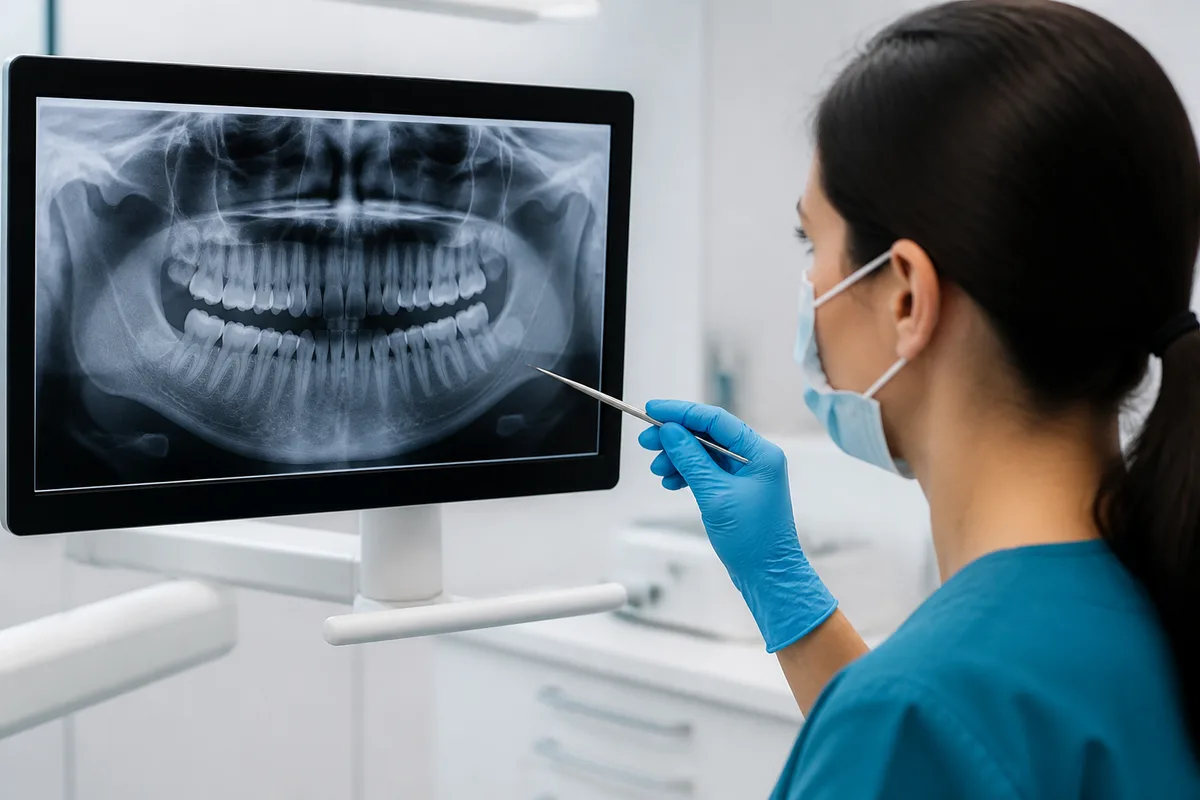
Digital X-rays
Digital X-rays are one of the basic diagnostic tools used in modern dentistry, giving a clear picture of what is happening beneath the surface of your teeth and gums. At Harbor Point Dental Group, this low-radiation digital imaging helps guide diagnosis and treatment planning for a wide range of dental concerns.
What digital X-rays is
Digital X-rays use an electronic sensor in place of traditional film to capture images of the teeth, roots, and surrounding bone. The sensor sends the image directly to a computer screen, where it can be viewed, enlarged, and adjusted for brightness and contrast. This makes it easier to spot small details that might otherwise be missed.
Compared to older film-based X-rays, digital imaging uses significantly less radiation and produces results almost instantly, without the need for chemical processing. Because the images are stored electronically, they can also be pulled up quickly for comparison at future visits, which helps track changes over time.
How we use it at Harbor Point Dental Group
Digital X-rays are part of the routine diagnostic process at Harbor Point Dental Group, used to help identify issues that aren't visible during a standard visual exam. This includes checking for cavities between teeth, evaluating bone levels around the gums, and getting a closer look at tooth roots and nerve areas.
This imaging works alongside other services offered at the practice. For example, it can help confirm the presence and extent of decay before a cleaning or filling, assess bone structure when considering dental implants, or provide a clearer view of tooth position during Invisalign planning. In an emergency dentistry visit, a quick digital X-ray can help pinpoint the source of pain or identify a fracture that isn't obvious on the surface.
Dr. Maya Okafor, who has practiced general dentistry since graduating from NYU College of Dentistry, reviews these images as part of standard diagnostic care during exams and treatment visits.
What it means for you
For patients, digital X-rays offer a faster, more comfortable way to get a clear diagnostic picture. Because the sensor sends images directly to a screen, there's no waiting for film to develop, which means less time in the chair overall.
The lower radiation exposure compared to traditional film X-rays is also a meaningful benefit, particularly for patients who need imaging more than once a year. And because the images can be enlarged and viewed on a screen, your dentist can walk you through exactly what they're seeing, making it easier to understand your own oral health and any recommended next steps.
What to expect during your visit
Before taking a digital X-ray, you may be asked to remove any metal jewelry or glasses. A small sensor is placed inside your mouth, positioned near the area being imaged, and you'll be asked to hold still for a few seconds while the image is captured. Depending on how many images are needed, this process typically takes just a few minutes total.
Some patients feel mild pressure from the sensor, especially in the back of the mouth, but the process is not painful. Once captured, the image appears on a screen almost immediately, and your dentist can review it with you right away as part of your exam or treatment discussion.
Frequently asked questions
Are digital X-rays safe?
Digital X-rays use a low level of radiation, significantly less than traditional film X-rays. They are a standard part of dental diagnostic care and are used to help catch issues early, when they're often easier to address.
How long does a digital X-ray take?
Capturing an individual digital X-ray image typically takes just a few seconds. A full set, if needed, usually takes only a few minutes, and the images are available for review right away.
How often will I need digital X-rays?
How often X-rays are needed depends on your individual oral health, history, and any specific concerns being evaluated. Your dentist will let you know when imaging is recommended as part of your visit.
Is this suitable for everyone, including children?
Digital X-rays are commonly used across a wide range of patients, including children, thanks to their reduced radiation exposure compared to older film-based methods. Your dentist can discuss what's appropriate based on your age, history, and current dental needs.
If you have questions about digital X-rays or want to schedule a visit, reach out to Harbor Point Dental Group — we're happy to help.
This content is for general information only and isn't dental or medical advice. Talk with your dentist or orthodontist about your own situation. If you have a medical emergency, call 911.